

Mesothelioma deprived him of the life he should have had
 For 15 years, Daniel’s job at a Montana insulation plant entailed handling bags of asbestos contaminated vermiculite. His employer was fully aware of the dangers of asbestos, but failed to provide Daniel and his work colleagues with protective clothing and masks.
What is Mesothelioma?
Mesothelioma is a deadly cancer that attacks the mesothelium, the protective sac that lines the internal organs. Compared to other cancers, Mesothelioma is rare, “striking fewer than 3,000 Americans a year,” but of those diagnosed, “only about 1 in 10 (10%) will be alive in 3 years, and 1 in 20 (5%) will be alive in 5 years.” (CDC)
A primary reason for these dismal statistics is that mesothelioma, unlike many other forms of cancer, is difficult to detect in its infancy. Most medical professionals agree that the best defense against cancer is early detection, but mesothelioma has a 20-40 year latency period, which means that most of its symptoms are not immediately apparent. Or, if some symptoms are apparent, such as chest pain or shortness of breath during exertion, the afflicted may assume that they are experiencing the common cold or that they need to exercise more.
 At age 57, Daniel began to experience severe, persistent pain and labored breathing. Eventually, he became so weak that lifting a fork to eat required tremendous effort. His doctor gave him the devastating diagnosis: he had mesothelioma cancer.
Mesothelioma is linked to asbestos, a human carcinogen, which, for its durability, flexibility and resistance to fire are utilized in a number of industries, such as shipbuilding and engineering. Many of those currently suffering from mesothelioma are men who used to have careers in construction or in the military. It is estimated that older military veterans, such as those who served in World War 2 and Vietnam, compromise approximately 30% of mesothelioma sufferers.
 In addition to the construction and manufacturing industries, asbestos is widely used in hundreds of products such as plaster, fire blankets, various adhesives, and vinyl floor tiles. What is perhaps most disconcerting is that many of these products are easily accessible and used by people from all walks of life.
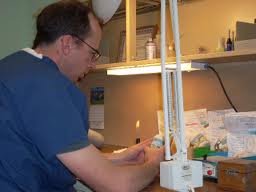
 One need not necessarily have a construction background to develop mesothelioma. There have been instances of homeowners and even medical professionals becoming sick while handling products and equipment that contained asbestos. One tragic example involved Marvin Penn, a dental technician, who developed mesothelioma after carving teeth replicas using asbestos based dental tape.
Asbestos fibers are easily transferrable, which means anyone who comes into contact with them can unknowingly jeopardize the health of their loved ones through secondhand asbestos exposure. Even those who were exposed to asbestos once are at risk of developing health problems later in life.
 The Three Types of Mesothelioma
Peritoneal Mesothelioma: Peritoneal mesothelioma involves the peritoneum, the abdominal lining. The peritoneum consists of two layers: the parietal layer, which protects the abdominal cavity and the visceral layer, which encases the abdominal organs. When a person inhales asbestos, the fibers attach themselves to the peritoneum tissue, and wreck devastation on the body. Peritoneal Mesothelioma is relatively rare; accounting for “less than 20% of mesothelioma cases.” (Mesothelioma Symptoms) Its symptoms include:


What is Mesothelioma?
Mesothelioma is a deadly cancer that attacks the mesothelium, the protective sac that lines the internal organs. Compared to other cancers, Mesothelioma is rare, “striking fewer than 3,000 Americans a year,” but of those diagnosed, “only about 1 in 10 (10%) will be alive in 3 years, and 1 in 20 (5%) will be alive in 5 years.” (CDC)
A primary reason for these dismal statistics is that mesothelioma, unlike many other forms of cancer, is difficult to detect in its infancy. Most medical professionals agree that the best defense against cancer is early detection, but mesothelioma has a 20-40 year latency period, which means that most of its symptoms are not immediately apparent. Or, if some symptoms are apparent, such as chest pain or shortness of breath during exertion, the afflicted may assume that they are experiencing the common cold or that they need to exercise more.

Mesothelioma is linked to asbestos, a human carcinogen, which, for its durability, flexibility and resistance to fire are utilized in a number of industries, such as shipbuilding and engineering. Many of those currently suffering from mesothelioma are men who used to have careers in construction or in the military. It is estimated that older military veterans, such as those who served in World War 2 and Vietnam, compromise approximately 30% of mesothelioma sufferers.

Asbestos fibers are easily transferrable, which means anyone who comes into contact with them can unknowingly jeopardize the health of their loved ones through secondhand asbestos exposure. Even those who were exposed to asbestos once are at risk of developing health problems later in life.

Peritoneal Mesothelioma: Peritoneal mesothelioma involves the peritoneum, the abdominal lining. The peritoneum consists of two layers: the parietal layer, which protects the abdominal cavity and the visceral layer, which encases the abdominal organs. When a person inhales asbestos, the fibers attach themselves to the peritoneum tissue, and wreck devastation on the body. Peritoneal Mesothelioma is relatively rare; accounting for “less than 20% of mesothelioma cases.” (Mesothelioma Symptoms) Its symptoms include:


